

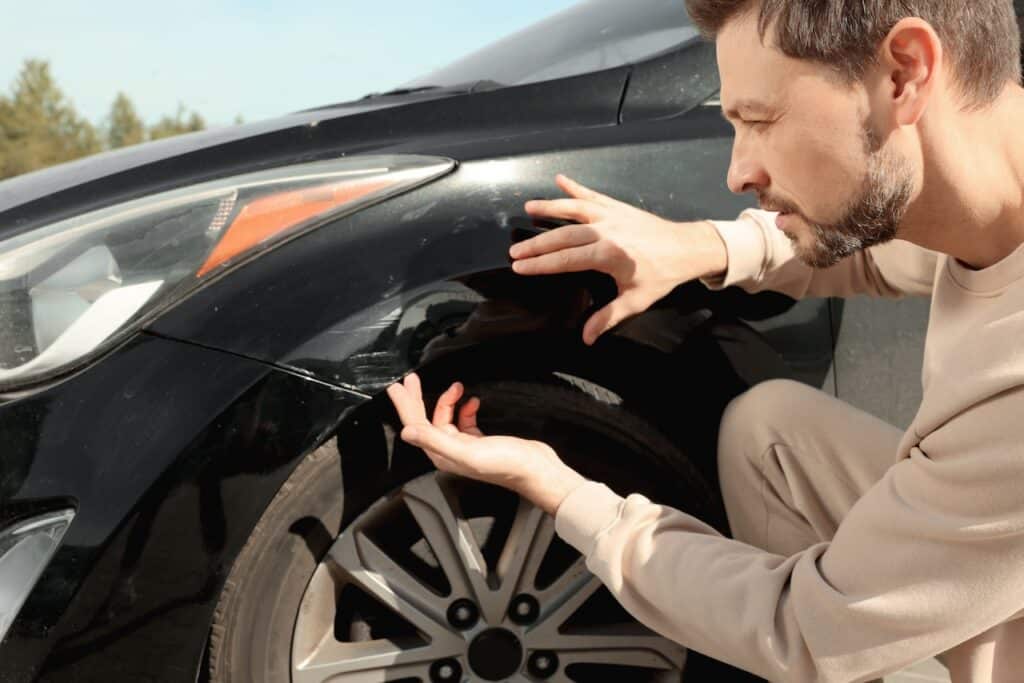
Tire rubbing after a collision usually means the crash shifted your wheel, suspension, or body panels. Don’t keep driving on it, since a rubbing tire wears down fast and can blow out, and the fix depends on the actual cause, so get a proper inspection before anything else.
You back out of the driveway after a fender bender, and something sounds off. There’s a scraping noise near one of your front wheels, and it gets louder when you turn. That sound is more than annoying—it’s your car telling you something shifted during the crash, and now, your tire might be rubbing on your fender. Let’s walk through what’s happening and what needs to be fixed.
Why Is My Tire Rubbing After an Accident?
Even a small collision can move the position of your wheel, tire, or the body panels around it. When that happens, the space between your tire and nearby parts gets tighter. That’s when you start hearing tire rubbing on the fender or other components. The most common parts a tire ends up rubbing against are:
- Fender
- Wheel-well liner
- Suspension components
- Bumper
- Inner body structure
The rubbing might be constant, or you might only hear or feel it when you move in a specific way. Some folks notice it only when turning, braking, or rolling over a bump. It all depends on where the parts are making contact.
What Does Tire Rubbing After a Collision Feel or Sound Like?
Your car gives off clear clues when something’s off. Here’s what tire rubbing on the fender or other parts usually feels or sounds like:
- Scraping or grinding near one wheel
- A repetitive rubbing sound that changes with speed
- Rubbing only while turning
- Rubbing when going over bumps
- Steering wheel vibration
- The vehicle pulling to one side
- Tire marks inside the wheel well
- Fresh wear or cuts along the tire’s sidewall or tread
- A wheel that looks pushed backward, forward, or inward compared to the other side
Common Causes of Tire Rubbing After an Accident
The cause of the rubbing depends on what the crash actually damaged. Here are the usual suspects a mechanic will check for during vehicle collision repair.
Bent Fender or Wheel Opening
A crash can crush the fender inward, narrowing the space around the tire. This leads to tire rubbing on the fender every time the wheel moves.
Loose or Damaged Wheel-Well Liner
The liner is the plastic guard inside the wheel well. If it comes loose, it can droop down and drag against your spinning tire.
Bent Suspension Components
Parts like control arms or the strut can bend in a collision. That shifts your wheel out of its normal spot and causes contact.
Wheel Alignment Has Shifted
A hit can knock your alignment off, changing the angle your tire sits at. Even a small change can bring the tire closer to a panel.
Wheel or Tire Was Damaged
A bent wheel or bulging tire won’t spin true. That wobble can create rubbing that comes and goes as the wheel turns.
Bumper or Body Panel Pushed Into the Wheel Well
A rear-end or corner hit can shove the bumper into the tire’s path, leaving you with tire rubbing on fender areas nearby.
Structural Damage Changed the Wheel Position
A harder crash can bend the frame or unibody. This moves the whole wheel, and it takes proper vehicle collision repair to set it right.
Is It Safe to Drive if My Tire Is Rubbing After an Accident?
Hold off on driving more than you have to. Constant rubbing wears through your tire fast, and a worn tire can blow out while you’re on the road. Rubbing also points to a bigger problem underneath, like bent suspension or frame damage.
If you keep driving, small issues turn into expensive ones. A dragging liner can melt, a rubbing tire can fail, and misaligned parts wear unevenly. Getting it looked at early saves you money and keeps you safe.
What Needs to Be Fixed When a Tire Is Rubbing?
The repair always depends on the real cause, so a proper inspection comes first. If it’s a bent fender or bumper, a repair shop will reshape or replace the panel to restore clearance. A loose liner gets refastened or swapped out.
When suspension or alignment is the issue, technicians will straighten or replace the bent parts and reset the alignment. If the frame moved, they’ll pull it back to factory specs on a frame machine. Every fix aims to put your wheel back where the manufacturer intended.
Frequently Asked Questions
Why does my tire only rub when I turn?
Turning swings your wheel toward the fender or liner. If a crash narrowed that space, the tire only touches at full turn.
Why does my tire rub when I hit bumps?
Bumps push your suspension up and down. If clearance is tight from the collision, the tire briefly presses into a panel with each bounce.
Can an alignment fix tire rubbing after an accident?
Sometimes. If a shifted alignment is the only issue, resetting it helps. But bent parts need repair before an alignment will hold.
Does tire rubbing mean my frame is bent?
Not always. Rubbing often comes from a bent fender or loose liner. Still, it can signal frame damage, so it’s worth an inspection.
Get It Checked at Valley Collision
If your tire’s been rubbing since your accident, let us take a look. At Valley Collision, our certified technicians handle every part of vehicle collision repair, from panel work to frame straightening. We’ll find what shifted and put it right, so you can get back on the road with confidence. Reach out today for a quote or more information.
